For healthcare professionals

pHGNS: More precision for more patients

Proximal hypoglossal nerve stimulation can deliver durable responses designed for comprehensive control for a wide range of Obstructive Sleep Apnea patients.

pHGNS has demonstrated results

Two randomized controlled trials have established Level 1 clinical evidence for pHGNS as a treatment for a wide range of adults with moderate to severe OSA. This is the most rigorous testing of an HGNS treatment.

Explore our clinical trial data

Explore findings from the latest randomized controlled trial, OSPREY, including detailed efficacy and safety outcomes, and explore data from other studies. These resources will be updated as new results are released.

pHGNS has unique features

LivaNova pHGNS mechanism of action OSA video thumbnail
How does pHGNS work?

Mechanism of action for the next-generation sleep apnea therapy

Proximal hypoglossal nerve stimulation (pHGNS) therapy is designed to improve upper airway function for adults with moderate to severe OSA. It is intended for those who can't use or can't tolerate positive airway pressure (PAP) therapy and other standard of care treatments.

*Video images are illustrative, not an actual product for sale

Join the waitlist

Get training and availability updates

FAQs

Clinical questions about pHGNS

Have a question that isn't answered here? Please fill out the contact form above.


hcp photo

Is pHGNS FDA approved?

The U.S. Food and Drug Administration (FDA) granted premarket approval in March 2026 for the aura6000™ System for the treatment of adult patients with moderate to severe Obstructive Sleep Apnea (OSA).

The system uses proximal hypoglossal nerve stimulation (pHGNS) to treat OSA in patients with an apnea-hypopnea index between 15 and 65 and who have failed, do not tolerate, or are ineligible for first-line therapies, such as positive airway pressure.

It is the first hypoglossal nerve stimulation therapy approved in the United States without a contraindication or warning related to complete concentric collapse (CCC).

The FDA premarket approval is supported by data from OSPREY, LivaNova’s prospective, multi-center, randomized controlled trial.

Building upon the FDA premarket approval, LivaNova is continuing to prepare its next-generation OSA device for a PMA supplement application to the FDA. 

What is the current pHGNS therapy indication?

pHGNS is FDA-approved for the reduction of apneas, hypopneas, or both in adult patients with moderate to severe obstructive sleep apnea (OSA), defined as an apnea-hypopnea index (AHI) of ≥ 15 and ≤ 65. It is intended for patients who failed, do not tolerate, or are ineligible to be treated with current standard of care treatments such as positive airway pressure (PAP), oral appliances, or pharmacotherapy.

What were the clinical outcomes in the OSPREY trial?

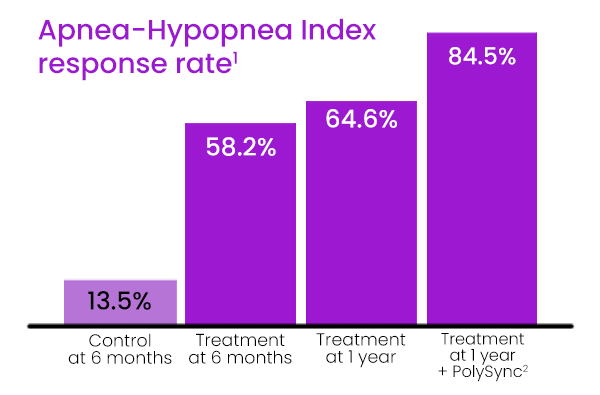
The OSPREY study compared sleep measures and oxygen levels between 2 groups of patients: the treatment group had pHGNS turned on ~1 month after implantation, and the control group had pHGNS turned on at ~7 months after implantation.

The primary endpoint was apnea-hypopnea index (AHI) outcome at month 7 (M7; after 6 months of treatment), and the secondary endpoints were oxygen desaturation index (ODI) and Clinical Global Impression - Improvement (CGI-I) at month 13 (M13; after 12 months of treatment).

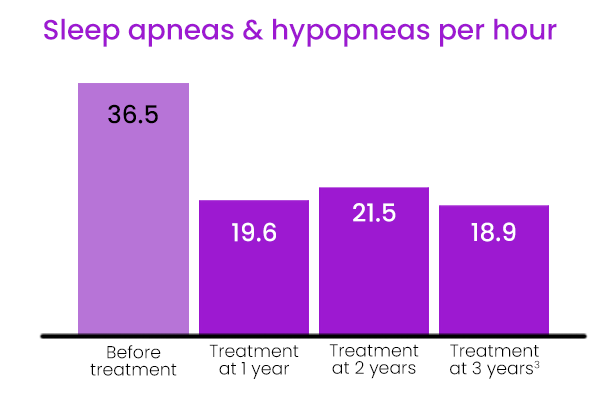
At M7, more patients in the treatment group had fewer interruptions in breathing (reduced AHI), improved symptoms according to their clinician’s assessment (CGI-I), and experienced fewer drops in blood oxygen levels (ODI) during sleep than the control group. At M13, improvements in all outcome measures at M7 were improved or maintained in the treatment group. Patients in the control group who had treatment turned on at M7 similarly experienced substantial improvements in OSA symptoms and sleepiness.
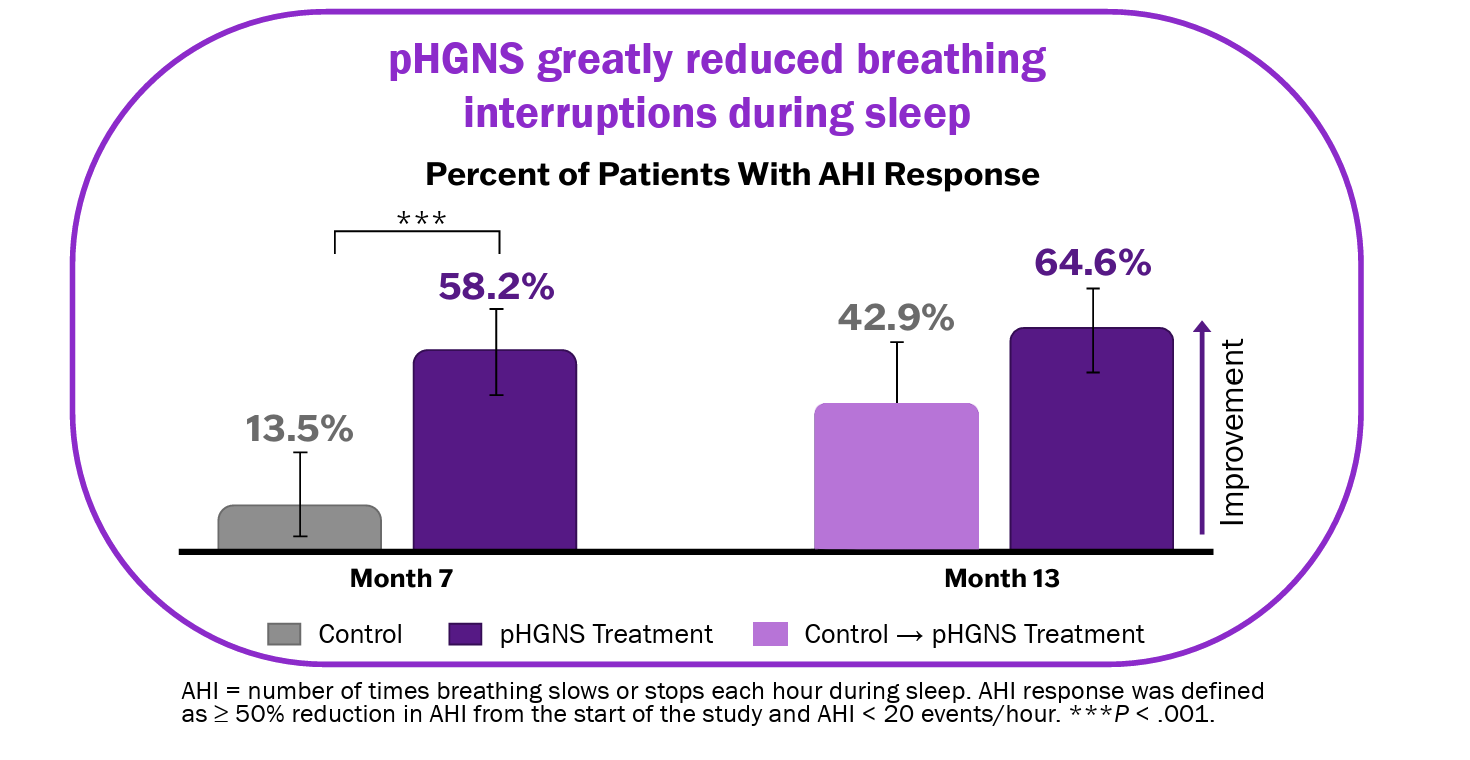
OSPREY pHGNS clinical trial results


Likewise, daytime sleepiness (ESS) and other patient-reported outcomes (PROs) and sleepiness symptoms (FOSQ, PROMIS-SDI, and PROMIS-SRI) improved at M7 and M13 with pHGNS treatment.

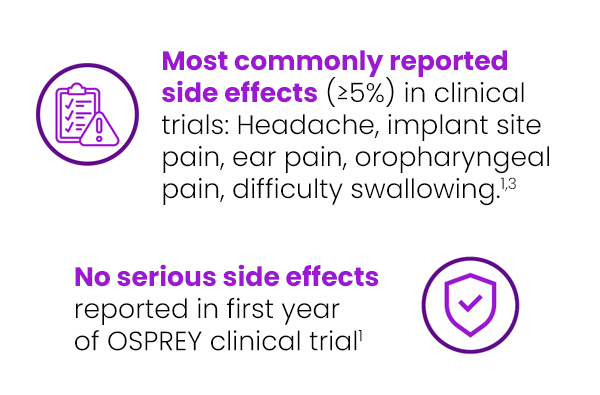
The most common side effects (in the pHGNS treatment group) were headache, implant site pain, and difficulty swallowing. No serious side effects related to the device or implantation procedure were reported. 

The journal Annals of Internal Medicine published an article chronicling the full 12-month data set for OSPREY in April 2026. 

See more OSPREY data in our fact sheet.

Is pHGNS an alternative to CPAP?

About half of OSA patients can’t use Continuous Positive Airway Pressure (CPAP). For patients who cannot tolerate or are otherwise unable to continue CPAP, an effective and safe therapy is needed. Proximal hypoglossal nerve stimulation (pHGNS) is a proven safe and effective treatment that can be an alternative to CPAP.

How is pHGNS different from other HGNS therapies?

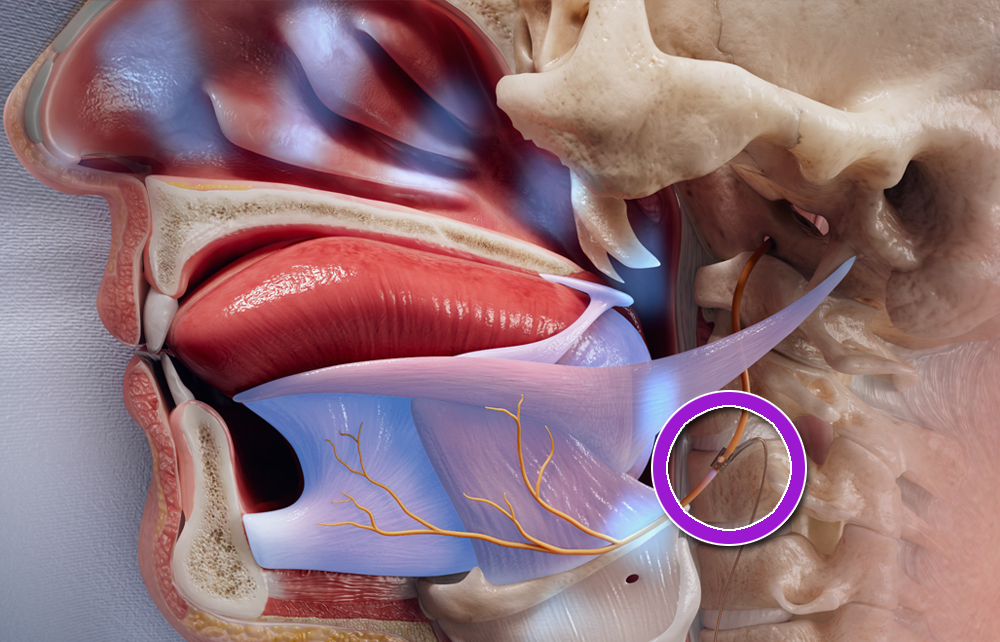
In proximal hypoglossal nerve stimulation (pHGNS), electrodes are attached to the proximal hypoglossal nerve, prior to any branching, rather than the distal hypoglossal nerve, which is subsequent to nerve branching.

The proximal nerve trunk is easier to reach — leading to a shorter, less invasive surgery — and allows control of all of the muscles innervated by the proximal hypoglossal nerve.

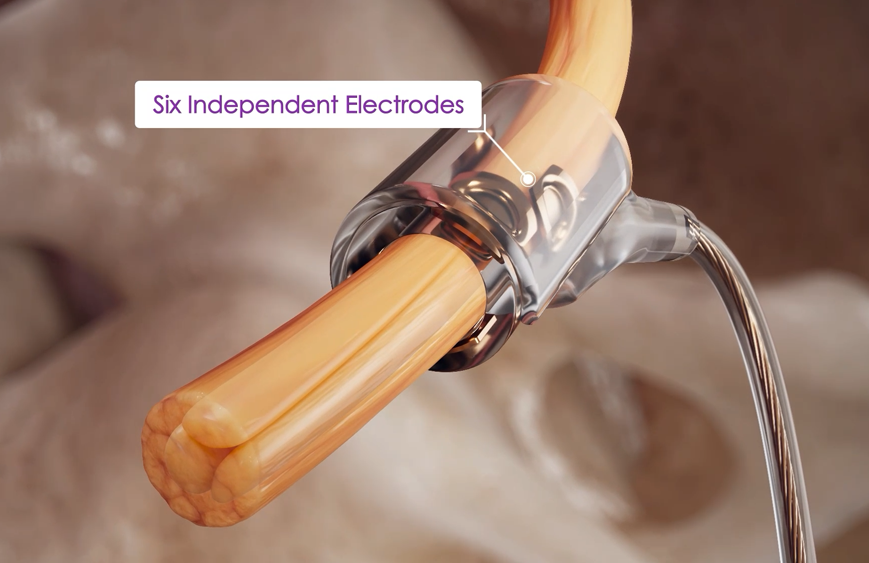
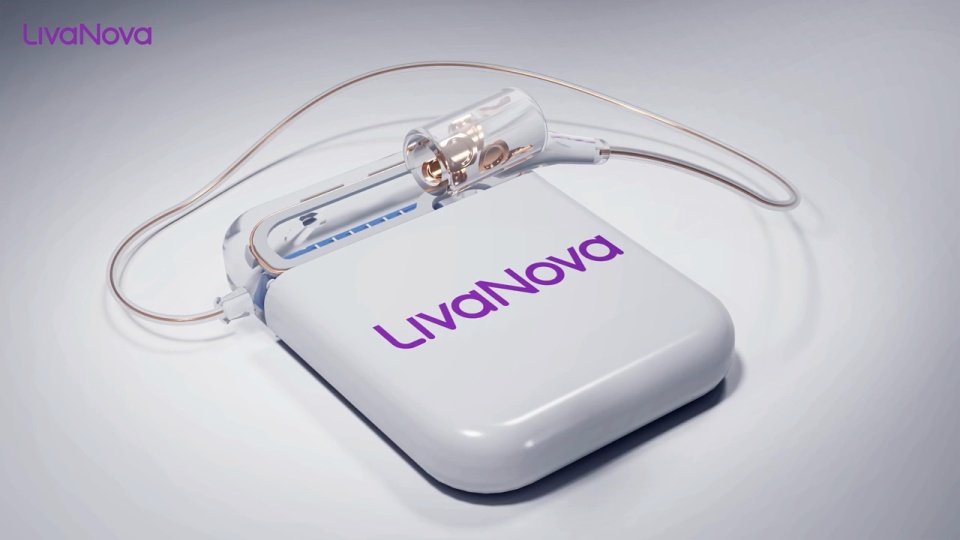
In addition, LivaNova’s pHGNS implant includes six electrodes, which can be activated both individually and simultaneously, resulting in a unique combination of technology and physiology and flexibility in tailoring of therapy for patient needs.

How can I provide pHGNS to my patients?

LivaNova’s pHGNS sleep apnea therapy is not yet on the market. Building upon FDA premarket approval granted in March 2026, LivaNova is continuing to prepare its next-generation OSA device for a PMA supplement application to the FDA. 

Sign up for our email list for availability updates and training opportunities.


Footnotes
1. Atul Malhotra, Alan R. Schwartz, Eric Lovett, et al. Proximal Hypoglossal Nerve Stimulation for Obstructive Sleep Apnea in the OSPREY Study. Ann Intern Med.April 2026.doi:10.7326/ANNALS-25-04414.

3. Alan R. Schwartz, Ofer Jacoboqitz, et al. Three-Year Outcomes of Proximal Hypoglossal Nerve Stimulation in OSA. CHEST Journal. May 2026. doi:10.1016/j.chest.2025.11.057