For patients
Sleep apnea treatment
tailored to you


What pHGNS can do for you
Two clinical studies have shown benefits for a wide range of patients. After three years of use, 90% of patients would recommend pHGNS to a friend.

Better breathing
pHGNS can reduce the number of night-time breathing interruptions and sleep interruptions.
Better nights
Many pHGNS patients reported reduced snoring frequency and increased intimacy.
Better days
On average, pHGNS patients experienced less daytime sleepiness, greater alertness, and better overall well-being.
How does pHGNS therapy work?
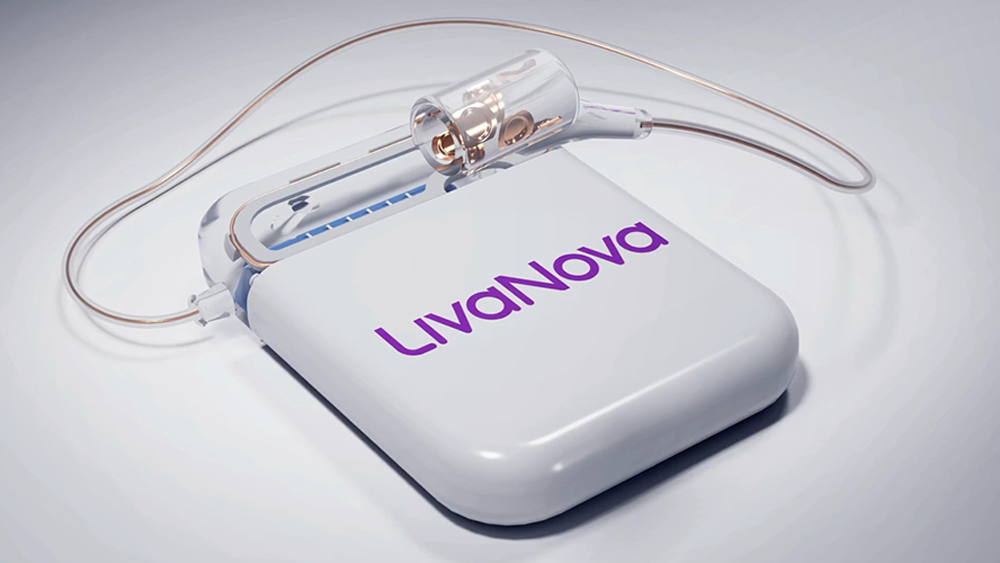
pHGNS is an implantable device that controls tongue muscles to open the airway.
- Delivers therapy automatically during sleep
- Settings are personalized to you
- Therapy can be adjusted throughout your life to adjust with changes in your body
- Battery is designed to last approximately 15 years depending on usage
Five steps to better sleep
Step into the future of sleep apnea
While LivaNova's sleep apnea therapy is not yet for sale, you can start talking to your doctor about sleep apnea implant qualifications and whether pHGNS might be right for you.
FAQs
Patient questions about sleep apnea implants

What is a sleep apnea implant?
A sleep apnea implant is an FDA-approved, surgically placed device for treating moderate to severe Obstructive Sleep Apnea (OSA) with upper airway stimulation. It targets the hypoglossal nerve, a nerve that controls tongue movement.
The newest type of sleep apnea implant uses proximal hypoglossal nerve stimulation (pHGNS) therapy. pHGNS is designed to improve upper airway function for a wide range of adult OSA patients, including those who can't or won't use positive airway pressure therapy, commonly called CPAP.
How does a sleep apnea implant work?
Sleep apnea implants use upper airway stimulation to treat Obstructive Sleep Apnea (OSA). A device implanted in the chest sends mild pulses to the tongue muscles during sleep. These pulses stimulate muscle movement and increase muscle tone, helping to keep your upper airway open while you sleep and allowing you to breathe better.
LivaNova's sleep apnea system has two main implantable components:
- Generator: A battery-powered device implanted in the chest that sends mild pulses to the hypoglossal nerve (which runs under the tongue) to keep the airway open.
- Stimulation lead: A thin, flexible connector links the generator to a soft band placed around the nerve that controls the tongue’s position, shape, and tone. The band has tiny electrodes that send signals to help move and tone the tongue.
Stimulation can be turned on and off through a hand-held controller, which also tracks sleep data and system usage data.
Are there different kinds of sleep apnea implants?
All sleep apnea implants use a type of upper airway stimulation called hypoglossal nerve stimulation (HGNS). There are two versions: pHGNS and dHGNS.
The p in pHGNS stands for proximal, which means closer to where the nerve starts. In this approach, the small contacts that send mild pulses are placed on the main part of the nerve before it branches out under the tongue.
The d in dHGNS stands for distal, meaning farther down the nerve. In this case, the contacts are placed on one of the smaller branches of the nerve, after nerve branching.
The proximal nerve trunk is easier to reach, which can mean a shorter, less invasive surgery. Stimulating the nerve trunk before it branches allows the therapy to influence all of the muscles controlled by the proximal hypoglossal nerve.
In addition, LivaNova’s pHGNS implant includes six electrodes, allowing for more precise targeting of the nerve trunk than systems with fewer electrodes.
Is a sleep apnea implant an alternative to CPAP?
About half of OSA patients can’t use or don't tolerate Continuous Positive Airway Pressure (CPAP). Proximal hypoglossal nerve stimulation (pHGNS) is a proven safe and effective treatment that can be an alternative for patients who cannot tolerate or are otherwise unable to continue CPAP.
Does nerve stimulation for sleep apnea work in all sleep positions?
More than half of people with OSA have worse symptoms when sleeping on their back.1 Gravity pulls the tongue backwards into the upper airway, restricting airflow.
Proximal hypoglossal nerve stimulation (pHGNS) can be used in any sleep position, including back sleeping.
Will I be able to feel nerve stimulation therapy?
You might feel tingling or other sensations from pHGNS sleep apnea therapy. This varies between individuals and may decrease over time. The most commonly reported side effects for pHGNS patients are headache, implant site pain, ear pain, discomfort in the back of the mouth and throat, and difficulty swallowing.
Will my insurance cover a sleep apnea implant?
Insurance coverage for the pHGNS device can vary. Many insurance plans do cover hypoglossal nerve stimulation, but it depends on your specific plan and whether certain criteria are met.