




Skip To Content
Choose another country or region to see content specific to your location. Thank you!

VNS Therapy™ treatment in paediatric patients

Long-term treatment option for children with hard-to-treat seizures1

VNS Therapy™ is indicated for use as an adjunctive therapy in reducing the frequency of seizures in patients whose epileptic disorder is dominated by partial seizures (with or without secondary generalisation) or generalised seizures, which are refractory to antiepileptic medications.2

VNS Therapy™ treatment in pediatric patients
Children may benefit from VNS Therapy™ by having fewer, less severe and shorter seizures with improved recovery after seizures3

VNS Therapy™ helps to control seizures3

In a study that compared the effects before and after being treated with VNS Therapy™ for 2 years:

children had fewer seizures

Fewer seizures

shorter seizures

Shorter seizures

less severe seizures

Less severe seizures

better recovery after seizures

Better recovery after seizures

Over 175,000 patients, including over 50,000 children, have been treated with VNS Therapy worldwide4

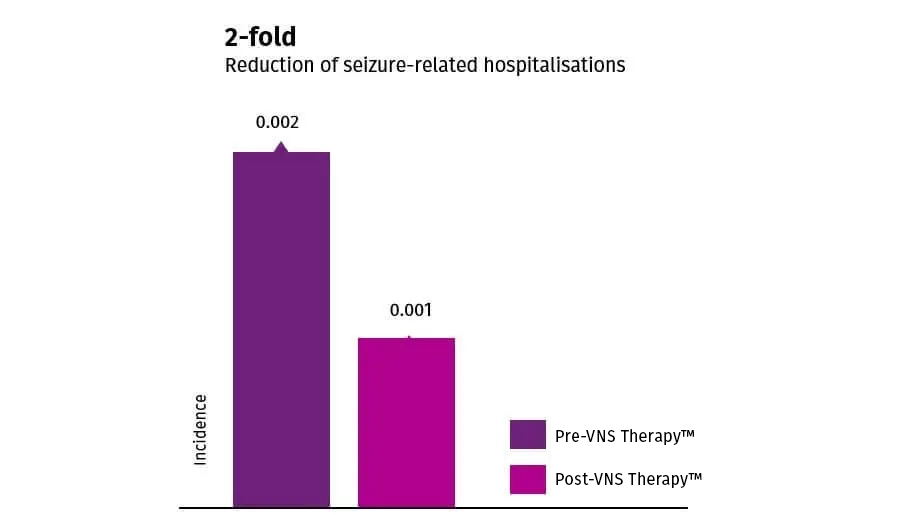
VNS Therapy has been shown to be associated with a reduction of hospitalisations and health related events5

2 Fold Reduction of Seizure-Related Hospitalisations

Incidence rates 6 months pre and up to 3 years post VNS Therapy in 207 adolescents with DRE

The presence of neurodevelopmental impairment is an important variable affecting quality of life for children with DRE and their families6

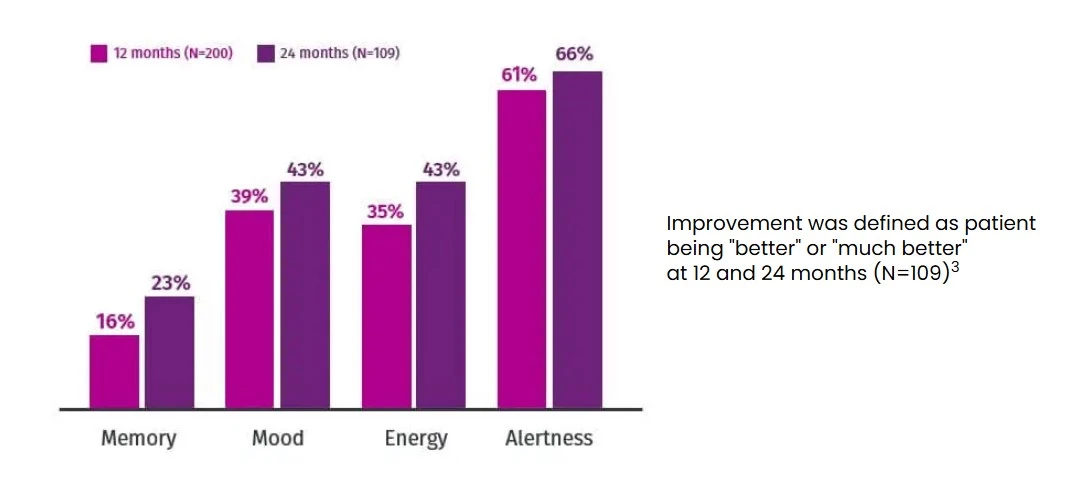
VNS Therapy patients have reported improvements in quality of life3


Graph_BC_10272d_v2


Limitations of the study included its retrospective design, that it was not designed to explicitly include different severities of childhood epilepsies, and that VNS Therapy™ dosing was not standardised (although it reflected routine clinical practice).

Time isn’t on their side. Treat early.

Time is an important factor in optimising outcomes at a critical period of development for children with DRE.

VNS Therapy™ has proven safety and tolerability profile with side effects reducing over time 7,8

Safety Profile

VNS Therapy has no drug interactions and does not cause drug-related toxic central nervous system side effects.9

The most common adverse events following stimulation (>5%) were voice alterations, increased coughing, pharyngitis, paresthesia, dyspnea, dyspepsia, and nausea. These side effects typically occur only during stimulation and generally become less noticeable over time for most patients.2,7,9

Infection is the most common complication of the surgical procedure. Children (<12 years of age) may have a greater risk for infection when compared to adolescent and adult patients (≥12 years).2

For more safety information click here.


References

1. Morris GL, et al. Neurology. 2013;81:1453–59. 2. VNS Therapy™ System Epilepsy Physician’s Manual (OUS), January 2025, LivaNova, Houston, TX. 3. Orosz I, et al. Epilepsia. 2014;55(10):1576–84. 4. Data on file, LivaNova USA, Inc., Houston, TX. 2025. 5. Helmers SL, et al. Eur J Paediatr Neurol. 2012;16(5):449–58. 6. Camfield C, et al. Epilepsia. 2001;42(1):104–12. 7. Ben-Menachem E. J Clin Neurophysiol. 2001;18(5):415–8. 8. Elliott RE, et al. Epilepsy Behav. 2011;20(1):57–63. 9. VNS Therapy™ Patient’s Guide for Epilepsy (OUS),  January 2025,  LivaNova, Houston, TX.

This website is intended for healthcare professionals in the United Kingdom. VNS Therapy™ for drug-resistant epilepsy is not available in all regions - please refer to your country-specific labelling.