








Choose another country or region to see content specific to your location. Thank you!
 

The unpredictable seizures of drug-resistant epilepsy (DRE) cause constant worry and prevent patients from living a fuller life

VNS TherapyTM is a Life-changer

Provide the intervention they need now to stimulate the life changes they desire.

In a survey of 200 VNS Therapy™ patients and caregivers1:
94% Reported They Wish They Had Know about VNS Therapy Sooner
86% Said They Worry Less Because of VNS Therapy

A stimulating rationale for VNS TherapyTM - break the cycle of repeated anti-seizure medication (ASM) failures

  • At least 1/3 of epilepsy patients will not achieve seizure freedom with ASMs2,3

  • Patients living with DRE suffer physical, psychological, and societal consequences of refractory seizures along with a heavy drug burden and increased mortality4-7

  • Important determinants of health-related quality of life in DRE include the burden of ASM toxicity, depressive symptoms and seizure worry8,9

The VNS Therapy™ System is indicated for use as an adjunctive therapy in reducing the frequency of seizures in patients whose epileptic disorder is dominated by partial seizures (with or without secondary generalisation) or generalised seizures that are refractory to anti-seizure medications.


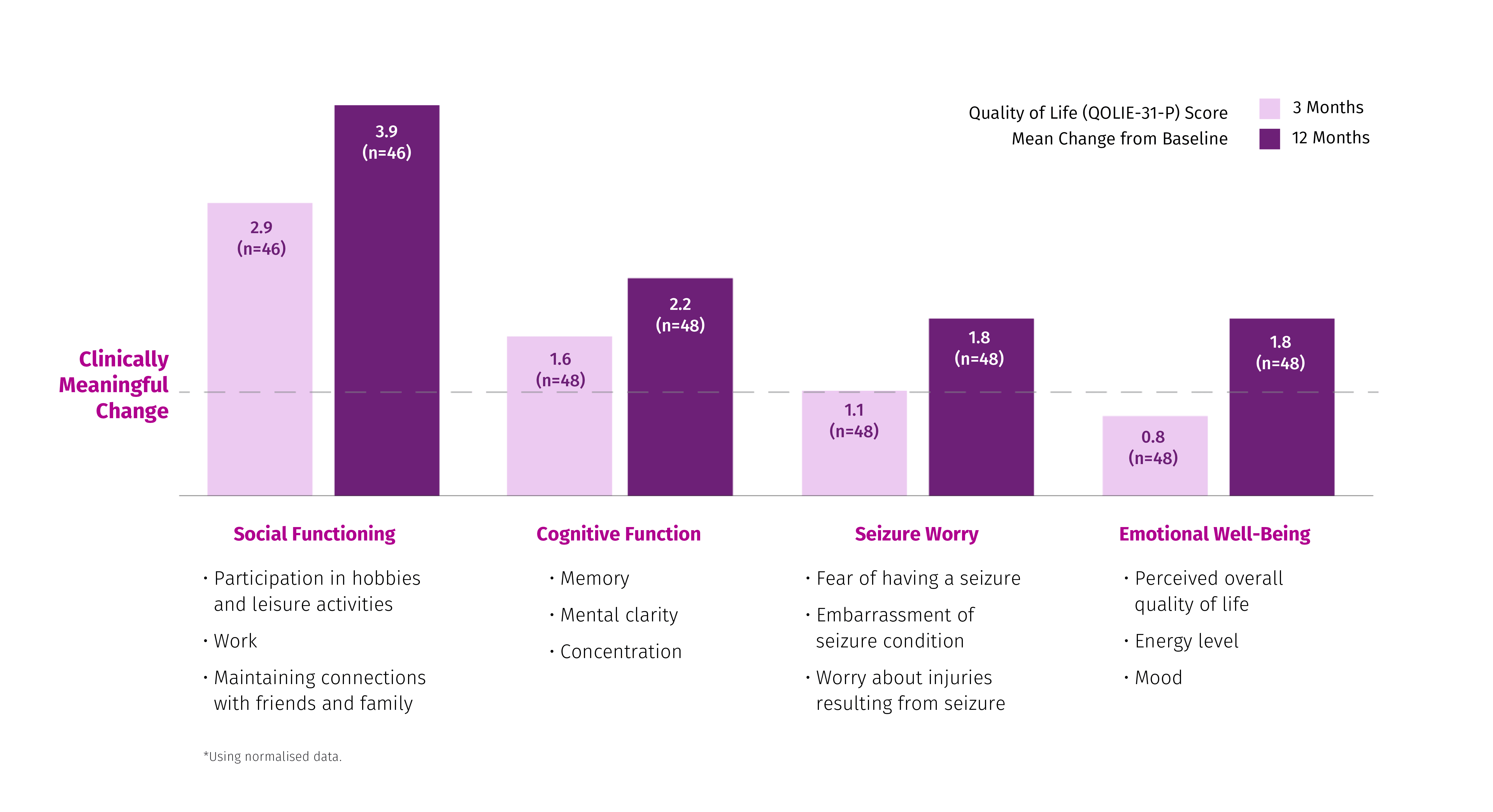
Stimulating life with VNS Therapy™ - helps improve your patients' emotional well-being and overall quality of life

Improvements in quality of life confirmed across 2 prospective, multicentre, clinical trials (E-36, E-37)10*

Chart No Title BC 10272e V1

Two men sitting together outside

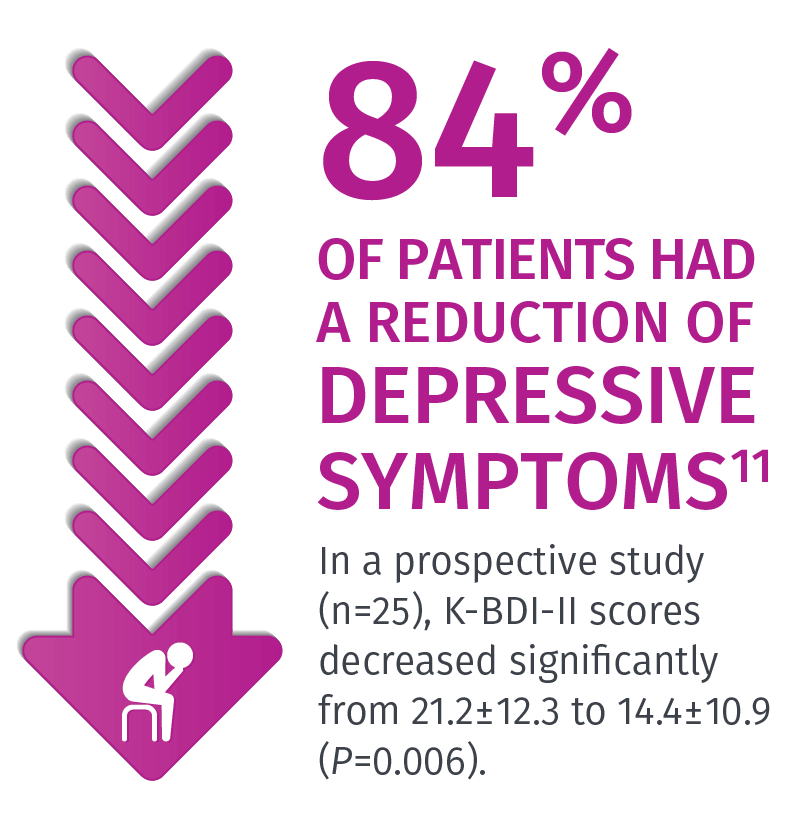
VNS TherapyTM can reduce mood-related symptoms in patients with DRE. VNS TherapyTM is not indicated for the treatment of depression in epilepsy patients.

K-BDI-II= Korean version of Beck Depression Inventory-II.

The effects of VNS treatment on mood-related symptoms in patients with DRE have varied between studies.

VNS Therapy is proven to be a safe adjunctive treatment and is well-tolerated by most patients without contributing to ASM toxicity12-14

  • Can improve seizure control without contributing to ASM toxicity
  • No drug interactions—can be combined with any ASM regimen

Most common side effects

  • The most common side effects of VNS Therapy occur during stimulation and generally become less noticeable over time for most patients15:
    • Hoarseness / Voice Alteration
    • Increased Coughing
    • Sore Throat
    • Tingling Sensation in the Neck
    • Shortness of Breath
  • Infection is the most common complication of the procedure12

VNS Therapy™ can help improve their QoL and reduce the burden of DRE

Qol Icon

-

Helps improve your patients' emotional well-being and overall quality of life16

seizure frequency icon

Continued reduction in seizure frequency over time: 76% mean seizure frequency reduction in patients who completed 10 years of VNS Therapy™ (N=65)14

Depression Reduction Icon

-

Associated with reduced depressive symptoms11

Proven Safe

-

Proven to be a safe, adjunctive treatment and is well-tolerated by most patients without contributing to ASM toxicity12

Seizure Control Icon

-

Can provide improvements in seizure control with 59% reporting ≥ 50% reduction and 41% reporting ≥ 80% reduction17

VNS Therapy™ has proven safety and tolerability profile with side effects reducing over time13,14

Safety Profile

VNS Therapy has no drug interactions and does not cause drug-related toxic central nervous system side effects.15

The most common adverse events following stimulation (>5%) were voice alterations, increased coughing, pharyngitis, paresthesia, dyspnea, dyspepsia, and nausea. These side effects typically occur only during stimulation and generally become less noticeable over time for most patients.12,13,15

Infection is the most common complication of the surgical procedure. Children (<12 years of age) may have a greater risk for infection when compared to adolescent and adult patients (≥12 years).12

For more safety information click here.

INTENDED USE / INDICATIONS Epilepsy (Non-US) The VNS Therapy™ System is indicated for use as an adjunctive therapy in reducing the frequency of seizures in patients whose epileptic disorder is dominated by partial seizures (with or without secondary generalisation) or generalised seizures that are refractory to anti-seizure medications.

References

1. Data on file, LivaNova USA, Inc., Houston, TX. 2021. 2. Chen Z, et al. JAMA Neurol. 2018;75(3):279–86. 3. Kwan P, Brodie MJ. N Engl J Med. 2000;342:314–9. 4. Wheless JW. Epilepsy Behav. 2006;8(4):756–64. 5. Gilliam F. Neurology. 2002;58(8 suppl 5):S9–20. 6. Fisher RS, et al. Epilepsy Res. 2000;41(1):39–51. 7. Thurman DJ, et al. Epilepsia. 2017;58(1):17–26. 8. Luoni C, et al. Epilepsia. 2011;52(12):2181–91. 9. Loring DW, et al. Epilpesy Behav. 2004;5(6):976–80. 10. Data on File, E37 Pooled Calculations, LivaNova, Houston, TX. 11. Kim SJ, et al. J Clin Neurol. 2021;17(3):385–92. 12. VNS Therapy™ System Epilepsy Physician’s Manual (OUS), January 2025, LivaNova, Houston, TX. 13. Ben-Menachem E. J Clin Neurophysiol. 2001;18(5):415–8. 14. Elliott RE, et al. Epilepsy Behav. 2011;20(1):57–63. 15. VNS Therapy™ Patient’s Guide for Epilepsy (OUS), January 2025, LivaNova, Houston, TX. 16. Soleman J, et al. Epilepsy Behav. 2018;88:139–45. 17. Hamilton P, et al. Seizure. 2018;58:120–26.


This website is intended for healthcare professionals in the United Kingdom. VNS Therapy™ for drug-resistant epilepsy is not available in all regions - please refer to your country-specific labelling.